





 Security guarantees
100% secure payments: PayPal, Visa, MasterCard, bank cards, alternative payments.
 Delivery policy
Deliveries by Mondial Relay or Colissimo (French fast postal service).
 Returns policy
Returns accepted up to 14 days after delivery
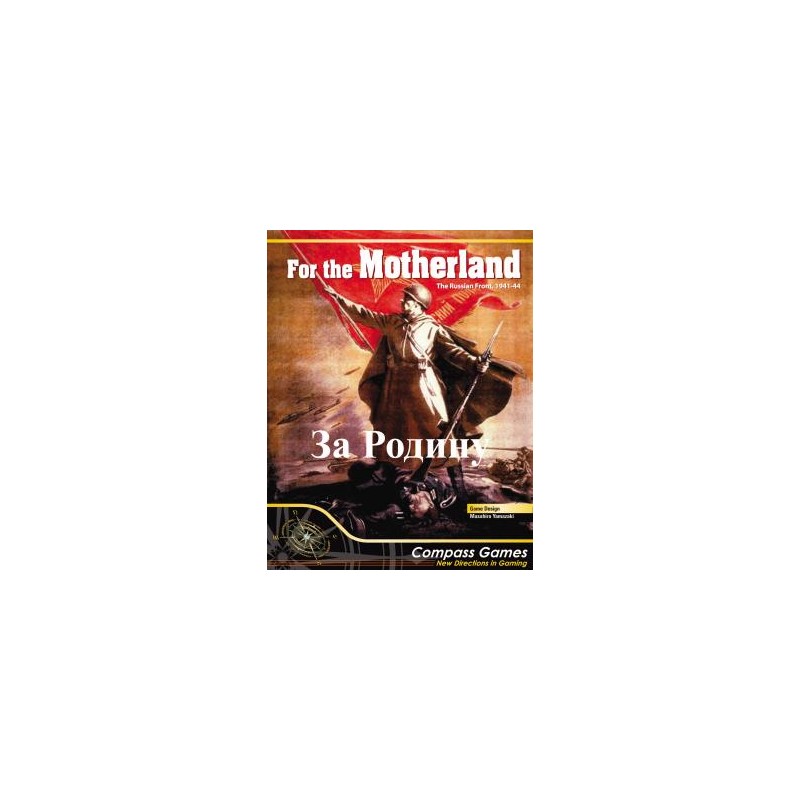
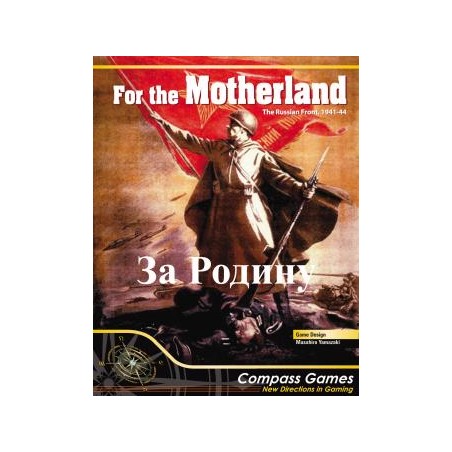
For the Motherland! The Russian Front, 1941–44 is a strategic wargame covering the Eastern Front from Operation Barbarossa in June 1941 through the major Soviet offensives of 1944. Designed by Masahiro Yamazaki, it is a streamlined reimagining of his acclaimed War for the Motherland, preserving the historical scope while delivering a shorter and more accessible playing experience.
Players command either the German Axis forces or the Soviet Red Army, managing offensives, reinforcements, logistics, attrition, and the gradual shift in strategic momentum.
Game system
The game is a hex-and-counter strategic wargame focused on maneuver warfare, reserves, and operational attrition.
Units primarily represent:
A key feature is the combat strength chit system, in which Soviet combat effectiveness gradually improves throughout the campaign, accurately reflecting the historical evolution of the Red Army between 1941 and 1944. Supply, encirclements, armored breakthroughs, and replacement management are central to gameplay.
Included scenarios
Operation Barbarossa
June–December 1941
The German invasion of the Soviet Union.
The Road to Stalingrad
1941–1942
The advance toward southern Russia and Stalingrad.
Fall Blau
1942–1943
The Caucasus offensive and the Soviet counteroffensive.
War for the Motherland
1941–1944
The complete campaign covering the entire war through the Soviet offensives of 1944.
Objective
The German player must exploit early operational superiority to destroy Soviet forces and achieve decisive strategic objectives before Soviet strength becomes overwhelming.
The Soviet player must trade space for time, rebuild military strength, and eventually launch powerful counteroffensives to drive the Axis back.
Players
1–2 players
Playing time
Complexity
Medium
A streamlined strategic system offering substantial historical depth.
Game scale
Period: 1941–1944
Level: Strategic
Scale:
Replayability
Four historical scenarios
Full campaign
Dynamic Soviet combat improvement
Reserve and attrition management
Strong asymmetry
High strategic flexibility
Components (indicative)
1 mounted map
5 countersheets
Rulebook
2 player aid cards
German and Soviet reinforcement displays
1 six-sided die
Data sheet