




- New


 Security guarantees
100% secure payments: PayPal, Visa, MasterCard, bank cards, alternative payments.
 Delivery policy
Deliveries by Mondial Relay or Colissimo (French fast postal service).
 Returns policy
Returns accepted up to 14 days after delivery
Publisher: VUCA Simulations
Designer: Hiroyuki Inose
Developer: Edgar Gallego
Artists: Jules Kanou, Patrick Gebhardt
Period: World War II
Theater: Pacific War
Players: 2
Playing Time: 120–480 minutes
Language: English
Type: Strategic / Operational Wargame
BGG Complexity: 2.50/5 — medium according to the currently available community data.
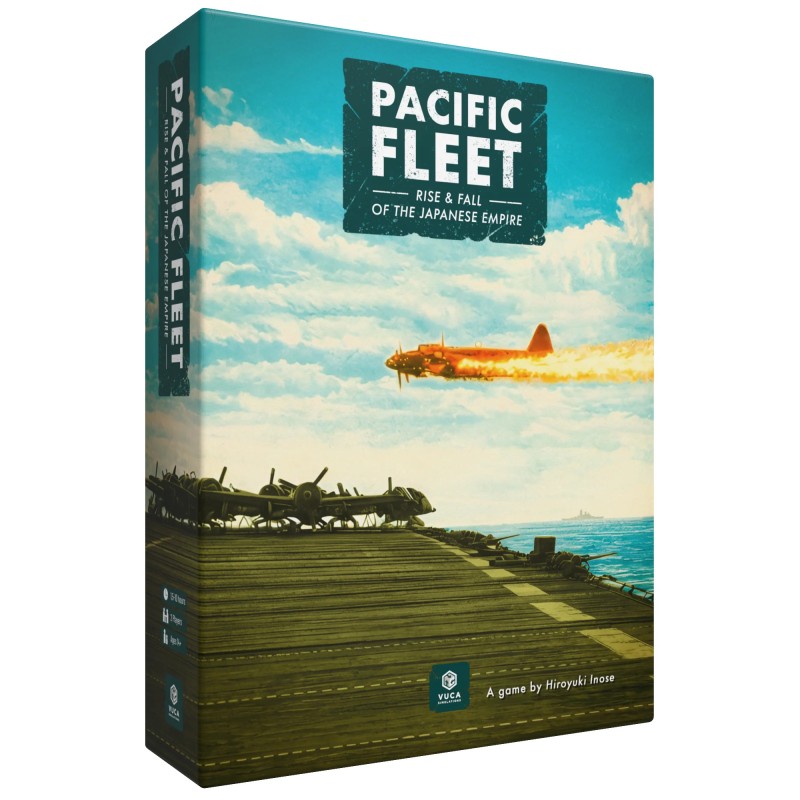
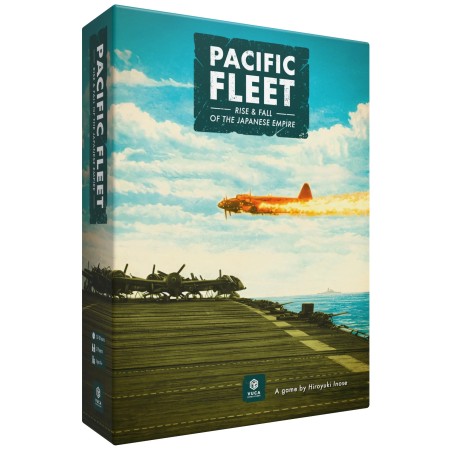
From the surprise attack on Pearl Harbor to the final Allied offensives of 1945, Pacific Fleet: Rise & Fall of the Japanese Empire is a large-scale simulation of the Second World War in the Pacific.
Players take command of the full spectrum of forces involved in the conflict, including naval forces, air power and ground units. Carrier warfare, amphibious operations, submarine warfare, strategic bombing and resource management are integrated into a single strategic system.
Japan must exploit its early advantages to expand and consolidate its position across the Pacific before Allied industrial power becomes overwhelming. The Allied player must survive the difficult opening stages of the war, manage limited resources and gradually build the strength required to launch the counter-offensive.
Pacific Fleet is therefore much more than a naval wargame: logistics, production, territorial control and operational tempo are all essential to victory.
Each game turn represents approximately three months and is divided into seven operational phases. Players must:
Fog of war is a major element of the game. Task Forces and ports can be concealed through the use of dedicated search maps, forcing players to make decisions without complete information.
Aircraft carriers, land-based aircraft, submarines and logistics therefore become critical strategic assets.
One of Pacific Fleet's main strengths is the integration of naval, air and ground warfare rather than treating the Pacific conflict as a series of isolated naval engagements.
Scenarios allow players to focus on specific situations and major battles, while campaign games provide a broader view of the entire Pacific War. Victory can be determined by destroying enemy forces, controlling strategic locations and maintaining operational momentum.
For Japan, time is the ultimate enemy. The Japanese player must make the most of the initial strategic advantage before the growing industrial power of the Allies turns the balance of the war.
Pacific Fleet is primarily aimed at experienced wargamers looking for a strategic simulation of the Pacific War with a strong operational dimension.
Data sheet